In process engineering, visible quality is a dangerous myth.
Two glass vessels can look identical on a shelf. Yet, under the stress of a 180°C exothermic reaction, one holds firm while the other fails. For plant managers, the difference isn't the raw material , it is the fabrication physics.
Procurement is not just about buying a vessel it is about buying insurance against downtime.
The Physics of Reliability: Borosilicate Glass
In regulated environments, Borosilicate Glass is the material of choice, not for its aesthetics, but for its coefficient of thermal expansion. However, a competent borosilicate glass supplier knows that raw material data is meaningless if the fabrication process is flawed.
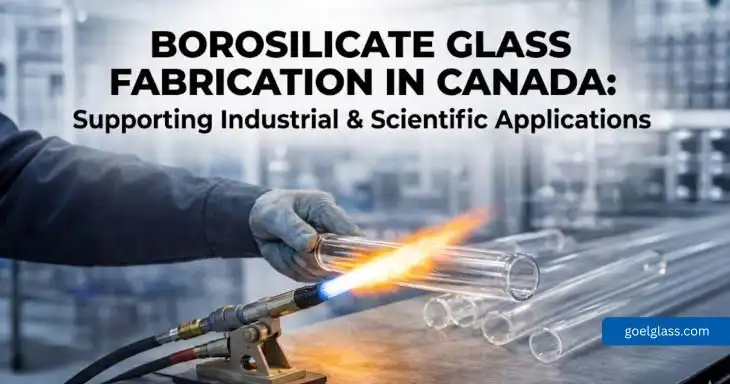
The critical variable is annealing. If a fabricator rushes the cooling process after glassblowing, residual tensile stress remains locked in the molecular structure. These invisible stress points become ticking time bombs. In professional fabrication, strict adherence to annealing schedules is the only way to ensure the material retains its theoretical strength.
Market participants, including Goel Glass Inc, align their operations with these material disciplines to ensure safety in regulated sectors.
Precision in Reactors and Evaporators
Moving from storage jars to dynamic process equipment raises the engineering stakes. When sourcing a glass reactor supplier, the critical metric is geometry.
- Agitator Clearance :If a reactor body is slightly oval, agitators can scrape walls.
- Thermal Transfer : A double jacketed glass unit supplier must ensure the jacket gap is uniform. Inconsistent spacing creates hot spots that compromise reaction control.
Similarly, a rotary evaporator supplier is judged on concentricity. In high-speed rotation, an unbalanced flask creates eccentric forces that destroy vacuum seals and drive motors. Buyers are not paying for the glass they are paying for the tolerances that protect the rest of the machinery.
Detailed specifications for these systems are available in the products section, where the focus remains on industrial-grade durability and standard compliance.
The Role of Custom Fabrication
Process intensification rarely happens inside standard dimensions. R&D teams often push chemistry into territories where off-the-shelf catalogs fail.
This is where a custom glassware supplier becomes a strategic necessity. Modifying an existing setup adding a dosing port or resizing a flange requires high-level flameworking. Re-heating a finished piece introduces new thermal gradients that must be carefully managed. A distillation unit supplier capable of custom fabrication allows process designers to build equipment around the chemistry, rather than forcing chemistry to fit the equipment.
As detailed in the custom fabrication services page, the capacity to modify glass without compromising structural integrity is a critical requirement for agile R&D.
Interoperability: The QVF Standard
In Canada, many pilot plants operate on legacy infrastructure. Engineers searching for QVF glassware in Canada are effectively looking for mechanical assurance.
- The Flange Risk :If a flange face is warped, maintenance teams often over-tighten bolts to force a seal. This mechanical stress causes breakage.
- The Standard : An industrial glassware supplier is expected to ensure faces meet naturally, allowing gaskets to seal under vacuum without excessive torque.
From Lab Bench to Production Floor
Scale-up is the most dangerous phase of product development. A laboratory glassware supplier that only understands beakers cannot support a plant engineer designing a continuous flow system.
This transition requires a supply chain that can pivot from prototype single-pieces to consistent production volumes. Reviewing a supplier's background, such as the history detailed on the about us page, helps procurement teams assess the ability to bridge the gap between scientific discovery and industrial application.
Conclusion: Engineering as a Safety Discipline
Glass is an unforgiving material. In industrial settings, it operates under vacuum, pressure, and thermal stress often simultaneously.
Selecting a fabricator is not a transaction it is a vetting process. It requires identifying partners who view glassblowing as a discipline governed by engineering standards. When tolerances are correct, glass becomes one of the most durable materials in the industrial arsenal.
For engineers needing to discuss specific technical parameters or custom configurations, please contact us directly to evaluate feasibility.