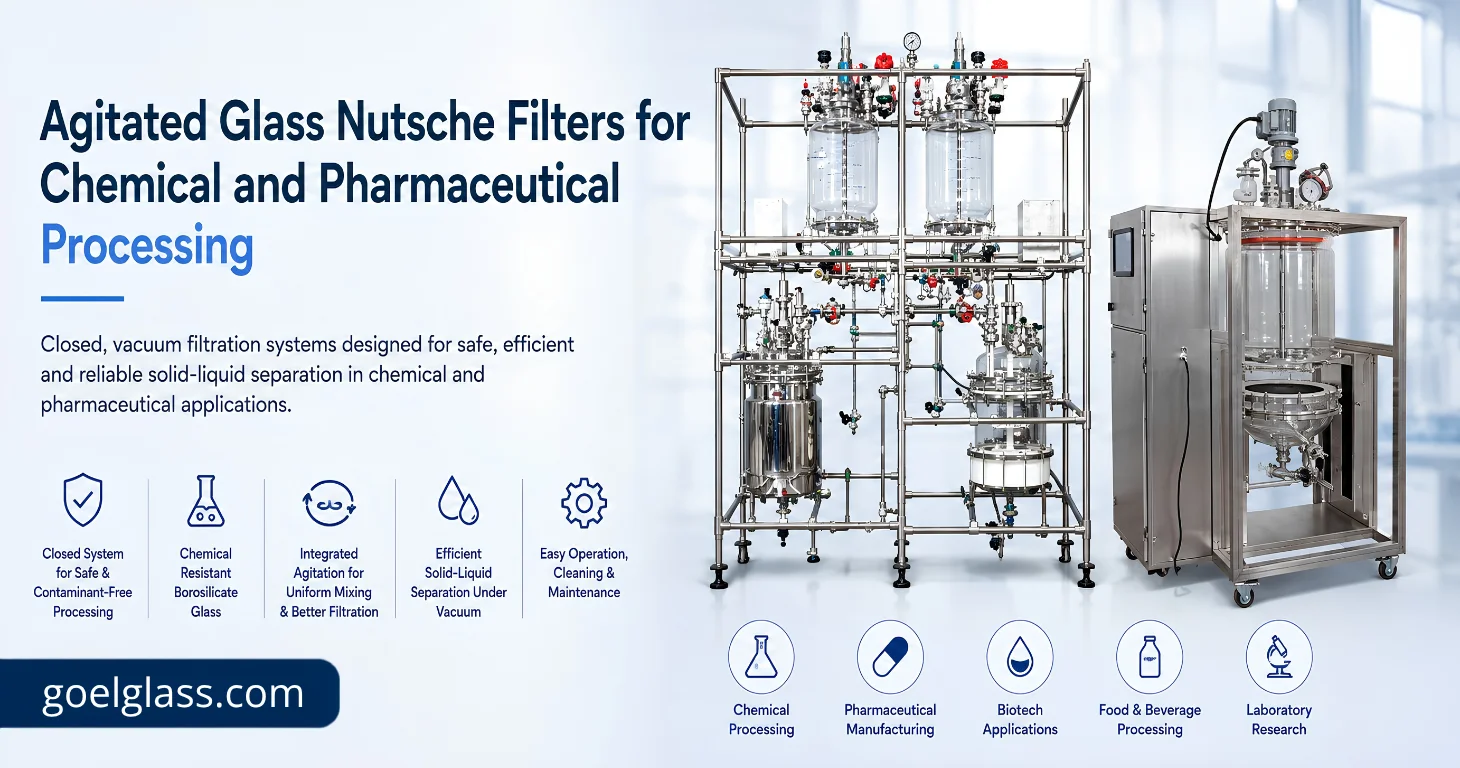
Open vessels just do not work for every filtration run. Sometimes the slurry is highly corrosive. Other times, the pharmaceutical compound is too sensitive for open-air exposure. In these strictly controlled environments, facilities need a system that contains the product and protects the operator.
An agitated glass nutsche filter delivers this level of process control. It allows operators to execute complex separations safely and efficiently.
Why Closed Filtration Systems Matter ?
Exposing high-purity materials to the open plant floor introduces unnecessary risk. A closed filtration setup locks the process down. It stops solvent evaporation and keeps harmful pollutants away from operators.
Containment sustains the purity of the batch. By utilizing transparent industrial glassware instead of metal, operators gain real-time visibility during the run.
Construction of an Agitated Glass Nutsche Filter
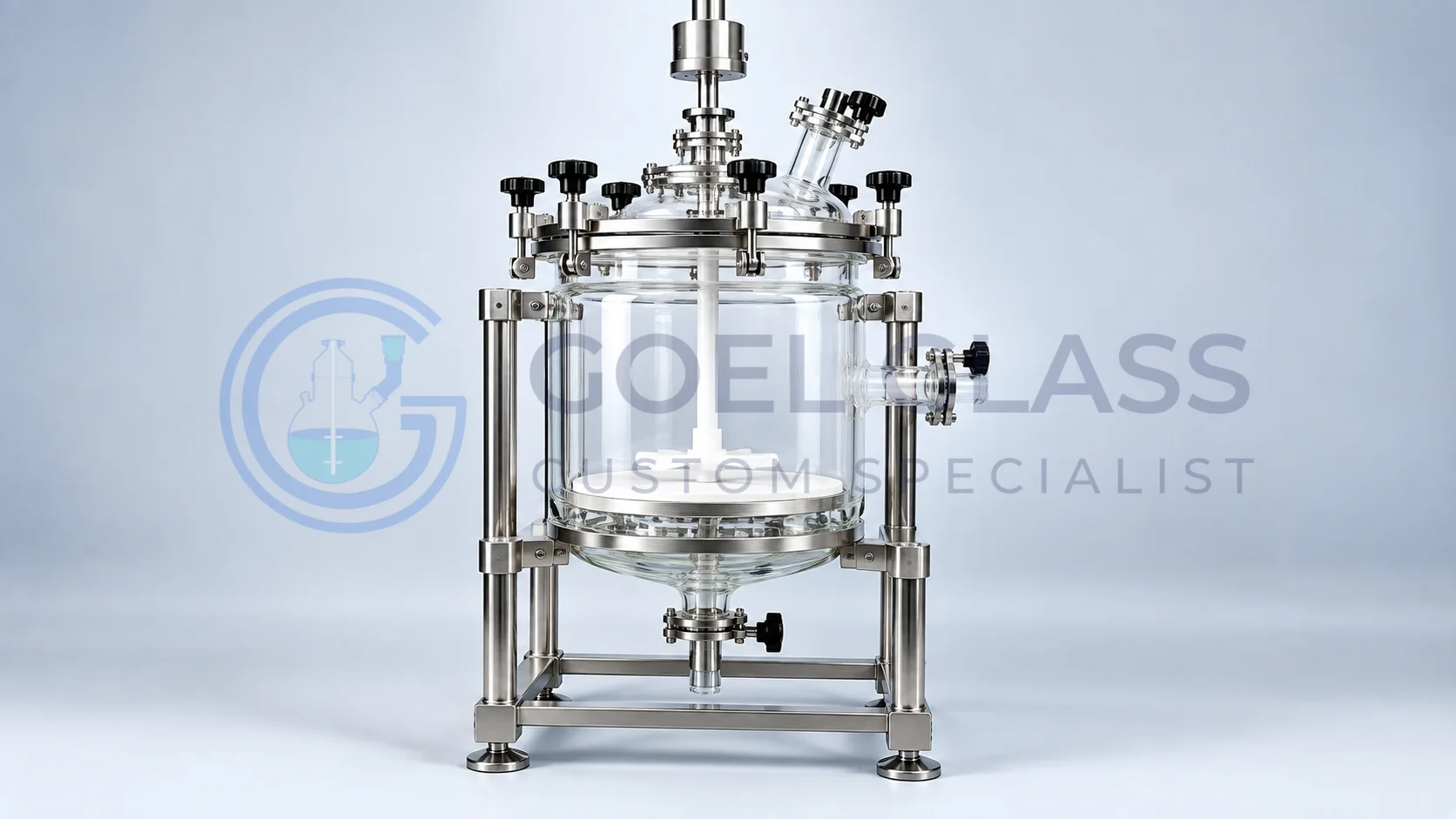
Hardware reliability comes down to materials. The main vessel uses borosilicate glass and PTFE components to handle corrosive media. Inside, an integrated stirring mechanism actively mixes the slurry to maintain a homogeneous blend.
Filtration happens at the base. A replaceable filter cloth separates the solids from the liquid based on particle size. The assembly pulls this liquid through under continuous vacuum. Once the cycle finishes, a manual or actuated bottom discharge valve lets operators remove the filtered cake quickly and cleanly.
Static filtration has limits. An agitated glass nutsche filter changes the dynamic by letting operators actively manage the slurry.
The internal stirrer maintains uniform mixing, which optimizes particle separation and improves filtration efficiency. Pair that active mixing with a closed vacuum and direct glass visibility, and you get a highly controlled processing environment.
Applications Across Chemical and Pharmaceutical Processing
This equipment adapts to different industrial demands. Chemical plants use it for crystallization, precipitation reactions, and recovering reusable catalysts. Pharmaceutical facilities rely on the closed environment to isolate active pharmaceutical ingredients (APIs) and filter sterile solutions.
The capability scales. Labs use smaller units for water and soil sample testing. Food processing lines use them to clarify juices, filter syrups, and isolate specific additives. They even handle thick formulations like lotions and creams.
Operational Advantages in Process Environments
Chemical resistance is the primary operational advantage of borosilicate glass. The material withstands severe corrosion from harsh chemicals. Transparent walls remove the guesswork from cycle times.
The agitation keeps the slurry uniform to keep the filtration moving. Yet, despite handling complex processing, the unit remains simple to operate and maintain. It handles different slurries and media requirements easily, making it a practical tool for the floor.
Choosing the Right Filtration Configuration
System sizing requires looking at process chemistry, slurry traits, and operating conditions. Units scale from a few litres up to more than 100 litres to hit specific production targets.
Capacity, filter media, and vacuum requirements dictate the final build. Engineering teams evaluating agitated glass nutsche filter manufacturers in Canada or the USA usually map these parameters out early.
Working closely with an agitated glass nutsche filter supplier in Canada or an agitated glass nutsche filter supplier in USA ensures the agitation system and vacuum arrangements match the exact realities of your facility.
Planning Your Filtration Setup
Every process line behaves differently. Reviewing material compatibility and operating parameters early keeps the system aligned with the actual application. If you need to discuss specific process requirements, our team is ready to help. Connect with our engineering group through our Contact page.
Types of Glass Nutsche Filter Equipment
- Single wall Agitated glass Nutsche filter unit
- Jacketed Agitated glass Nutsche filter
- Bench - Top Jacketed Nutsche filter